
Behind the Curtain with Mak Secrest
Silent Sky: The Untold Story of the Woman Who Mapped the Universe
Apr
Company Onstage’s upcoming production of Silent Sky, written by Lauren Gunderson and directed by Charlotte YerpeStock, offers an awe-inspiring story about dreaming big in a world that overlooks you. At its center is Henrietta Leavitt, a young woman who arrives at the Harvard College Observatory in the early 1900s, eager to study the stars.
Henrietta joins a group of women known as “computers,” tasked with the painstaking work of analyzing photographic plates of the night sky. They chart, measure, and calculate, but they are not allowed to operate telescopes, let alone propose original theories. Their work is measured in “girl hours,” their ideas dismissed, their ambition quietly contained within the walls of the observatory.
These restrictions reflect a broader historical reality. At the turn of the 20th century, women in the United States were denied many basic rights. They could not vote nationally until the ratification of the Nineteenth Amendment in 1920. Married women could not independently own property, open bank accounts, or manage income without their husband’s consent. Many universities either barred women entirely or segregated them into affiliated institutions like Radcliffe College, where Henrietta earned her degree. Even highly educated women, like those working at Harvard, were paid significantly less than men and excluded from positions of authority.
And yet, even in the face of relentless limitations, something extraordinary begins to unfold. When Henrietta notices a subtle pattern in the pulsing light of a certain type of star, what starts as curiosity becomes a discovery of cosmic significance.
Silent Sky may feel like a work of historical fiction. But here’s the twist: Henrietta Leavitt’s story is real.
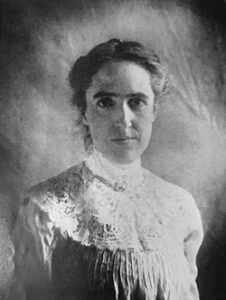
Born in Lancaster, Massachusetts, in 1868, her discovery of the relationship between a Cepheid star’s brightness and its pulsation gave scientists a reliable way to measure distance in space, ultimately helping prove that the universe is far larger than previously imagined. The women working beside her were real as well. Annie Jump Cannon developed the star classification system still used today, while Williamina Fleming cataloged thousands of stars and discovered new celestial objects.
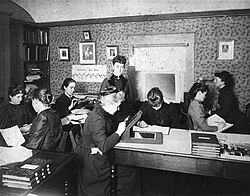
Together, these women transformed astronomy, yet their contributions were frequently published under the names of male supervisors or omitted entirely. When Henrietta died in 1921, her gravestone made no mention of the discovery that helped humanity measure the universe. It was much later that her work was formally recognized and named “Leavitt’s Law.”
This underrecognition is not unique to Henrietta. It is part of a larger pattern in science known as the “Matilda Effect”, where women’s contributions are historically overshadowed by those of their male colleagues. Rosalind Franklin, for example, played a crucial role in discovering the structure of DNA, yet James Watson and Francis Crick received the 1962 Nobel Prize. Lise Meitner helped discover nuclear fission, but the Nobel Prize in Physics went solely to her colleague, Otto Hahn. Across history, countless women have made groundbreaking discoveries that were overlooked or credited to men.
Silent Sky brings this history to life on stage, inviting audiences to witness not only Henrietta’s brilliance but the humor, warmth, and humanity of the women who worked beside her. As we follow their triumphs and setbacks, the play invites us to celebrate these overlooked pioneers and the many other women whose stories are only now being told.
Silent Sky runs April 3rd-25th.